News and Events
Gilchrist SWAT Youth Present Local Tobacco Retail Data to Community Leaders
December 11, 2025
This quarter, members of our Gilchrist County SWAT (Students Working Against Tobacco) club leaders took an important step in advocating for a healthier future in Gilchrist County. During a special presentation, the youth highlighted real tobacco retailer data using the Point of Sale Toolkit (POST) and the Florida Tobacco Mapper, two powerful tools that help communities understand how tobacco availability and advertising impact local youth.
To help community leaders visualize the issue, SWAT members brought several visuals, including maps showing the number of tobacco retailers in Gilchrist County, retailer density per 1,000 residents, and locations where retailers operate in close proximity to schools and other youth-centered areas. These materials painted a clear picture: tobacco products are highly accessible and heavily marketed in places where youth are most vulnerable to exposure.
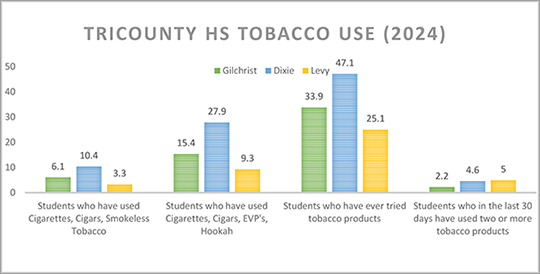
Using these resources, the students educated attendees on why local tobacco zoning policies matter. They explained how zoning strategies can reduce youth access to harmful products by limiting where tobacco retailers can operate, for example, by preventing new shops from opening near schools or parks, or by reducing the clustering of multiple retailers in small areas. They also discussed how zoning policies across Florida have helped communities decrease youth exposure to tobacco advertising and create safer environments for young people.
In addition to sharing the data, our SWAT leaders used the opportunity to recruit supportive partners. Community collaboration is essential, and the presentation helped spark conversations about how local leaders, organizations, and residents can work together to protect youth and support a healthier Gilchrist County.
This presentation was more than just an educational session; it was a proud moment for Gilchrist County. Our SWAT youth demonstrated leadership, confidence, and a genuine commitment to making a positive change. This was a meaningful opportunity for them to advocate not only for themselves, but also for their future families and the homes they’ll build right here in our community. Their message was clear: they want Gilchrist County to remain a safe, healthy place where future generations can thrive.